What happens when the people living around you are nothing like the people they appear to be?
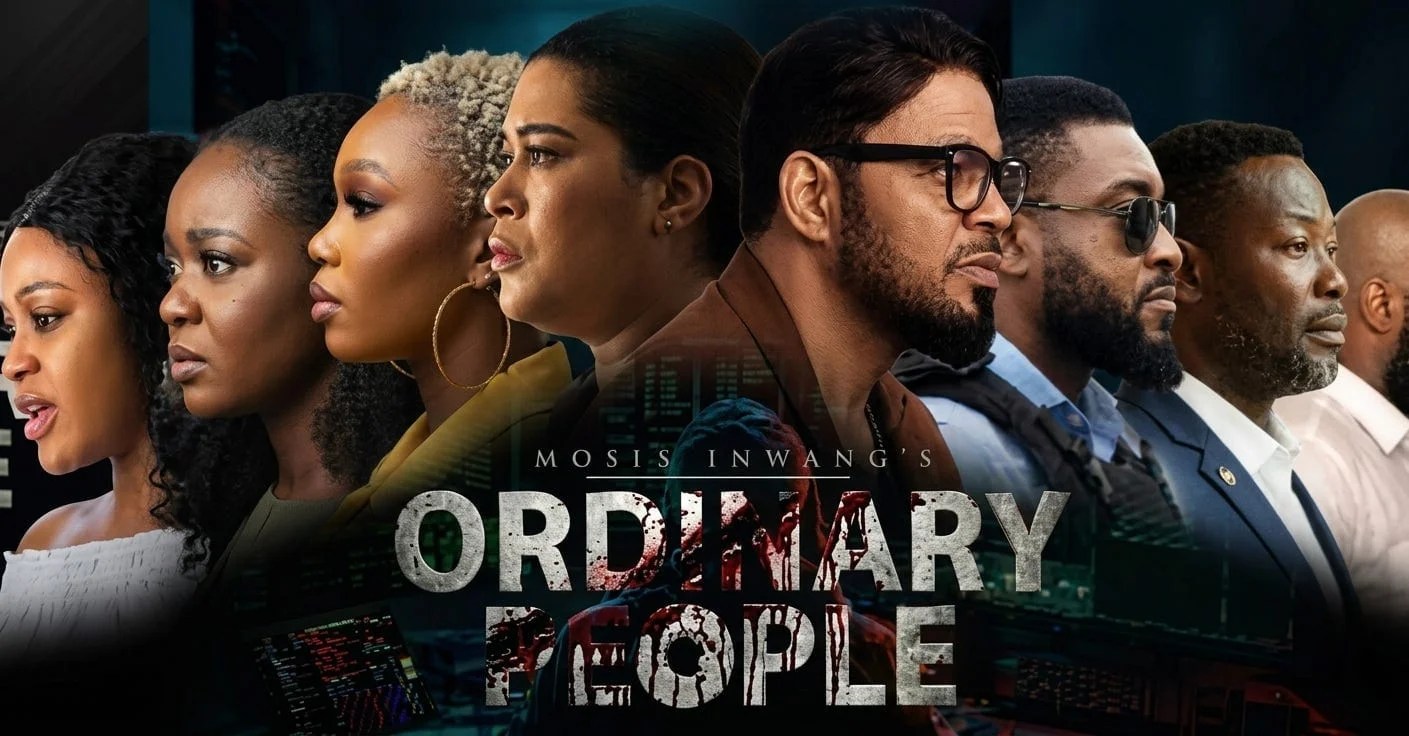
That question sits quietly at the centre of Ordinary People, Moses Inwang’s ambitious crime thriller set in Mirage Estate, a seemingly peaceful residential community where almost everyone has something to hide. Behind the neat houses, marriages, careers and respectable appearances are fugitives, investigators, abusers, addicts, criminals and people carrying old histories into new lives. The estate may look ordinary, but very little about the people living in it is.
Written and directed by Moses Inwang, the film follows Dare Laguda (Shawn Faqua), a bachelor and software engineer who moves into Mirage Estate. Unlike the other residents, however, Dare seems unusually interested in what happens behind closed doors. Using his cybersecurity skills, he gains access to the estate's surveillance systems and begins monitoring his neighbours.
At first, his actions can easily be interpreted as the curiosity of a technologically gifted man with too much time on his hands. Dare himself narrates his activities with an almost casual detachment. But Ordinary People gradually makes it clear that there is more to his presence in the estate than meets the eye.
And that is where the film begins to reveal its real ambition.
An Estate Full of Secrets
Mirage Estate is presented as a community of ordinary people living ordinary lives. Yet the further Dare looks, the more disturbing the reality becomes.
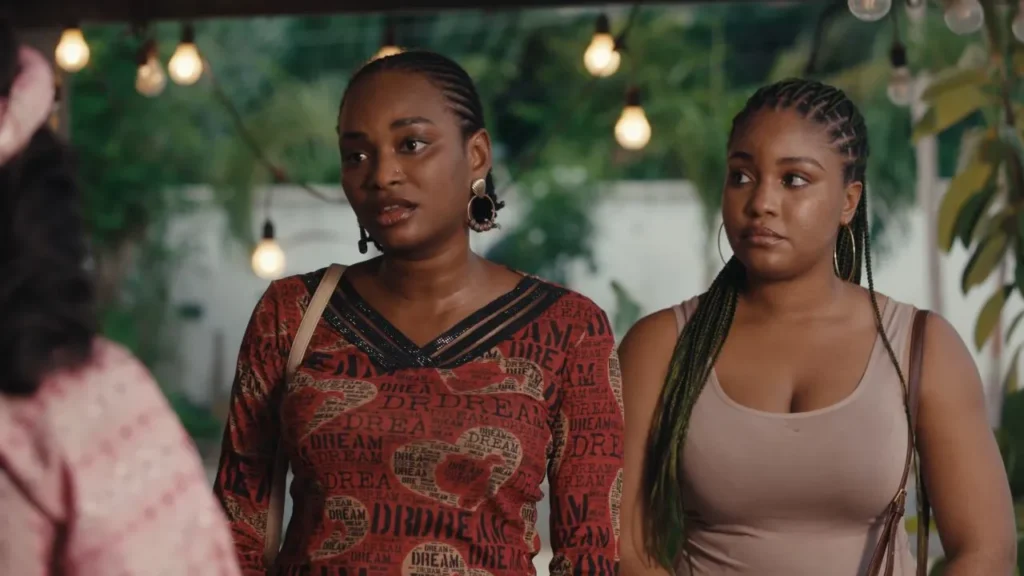
Tolu Daramola (Chidi Mokeme) and Margaret Daramola (Michelle Dede) are not quite the couple they initially appear to be, while Tony Appiah (Adjetey Anang) and Mercy Appiah (Jackie Appiah) are desperately trying to keep their past from catching up with them.
Pere (Lasisi Elenu), a comedian and seemingly cheerful family man, hides a disturbing reality behind his relationship with Audrey (Uche Montana). Emilia Daniel (Sharon Ooja) and Osaro Daniel (Eddy Watson) maintain the glamorous image of a successful couple while privately struggling with problems that threaten to consume them.
Dr. Adebayo (Gbenga Titiloye), the seemingly respectable estate chairman, is carrying a secret that could not only destroy his reputation but potentially cost him his career. And then there are Jonas and Luka Sommers (Ramsey Nouah and Adunni Ade) presented as a quiet Russian couple running a bakery, they seem considerably less threatening than some of the other residents. But the film gradually reveals that their identities are far more complicated than they appear.
That attention to character is one of Ordinary People's most commendable qualities. Nollywood crime films can sometimes introduce characters primarily as devices for moving a plot forward. Ordinary People makes a more deliberate attempt to give its characters histories, motivations and consequences. The secrets discovered about them are connected to the people they were before the audience met them, and their present circumstances are often consequences of decisions made in the past.
The film achieves this through backstory. At the beginning of each episode, the audience is given pieces of a character's history, often establishing what has happened previously while also providing context for what is about to happen next. These backstories give individual characters and paired storylines room to exist beyond the immediate events of the estate.
It is a smart choice for a story this crowded. Instead of introducing a character and immediately expecting the audience to understand every decision they make, the film gradually provides the history behind those decisions. The audience gets to understand where these people came from, what shaped them and why their present circumstances matter.
This also helps Ordinary People achieve one of its most difficult structural tasks: bringing numerous storylines together without making the film feel like a collection of unrelated stories. Tolu and Margaret's investigation, Tony and Mercy's past, Pere and Audrey's marriage, Emilia's struggles, Dare's personal mission and the mystery surrounding Jonas and Luka initially occupy different corners of the story. As the film progresses, however, these individual threads begin to intersect.
The ensemble does not simply exist within the same estate. Their stories gradually become part of the same larger narrative.
The film's opening prologue is instrumental to this larger mystery. Before Dare enters Mirage Estate, the audience is introduced to Tornado and Chinelo, a notorious criminal couple caught in a violent confrontation with security operatives. A baptism becomes the backdrop for a chaotic gun battle, ending with what appears to be the couple's death.
That opening initially feels disconnected from the estate story.
It isn't.
The film gradually brings the two worlds together, transforming what first appears to be a story about strange neighbours into something much larger involving crime, revenge, identity and unfinished business. The connection between the identities introduced in the opening and the people encountered later is one of the film's more ambitious storytelling choices. It gives the audience enough information to recognise the links while still allowing the mystery to unfold.
Ramsey Nouah and Adunni Ade deserve particular credit for carrying both sides of that transformation. However, the makeup used to distinguish their characters occasionally becomes distracting. The production clearly puts considerable effort into making Tornado and Chinelo look physically different from Jonas and Luka, but some of the complexion and facial alterations are so pronounced that they call attention to the transformation rather than allowing it to disappear naturally into the character. The visual distinction is understandable; the execution isn't always equally convincing.
The same can be said about the film's use of AI. There are moments where the technology is integrated subtly enough to serve the story. But elsewhere, it feels unnecessary. Some sequences use AI-generated imagery to illustrate information that could have been communicated through conventional performance and filmmaking. Instead of enhancing the scene, these moments occasionally remind the viewer that they are watching a film experimenting with a contemporary production tool.
Fortunately, these shortcomings don't overwhelm the larger achievement. Because Ordinary People has a genuinely ambitious story. It isn't merely interested in criminals and police officers. It constructs an entire community where crime exists in different forms. There are fugitives, investigators, domestic violence, substance abuse, medical malpractice, revenge and organised crime, all existing within the same seemingly peaceful estate.
More importantly, the film doesn't portray Nigeria simply as a place where criminals operate without opposition. The security forces are given an active role in pursuing the people responsible for these crimes. The police and other security operatives aren't merely decorative characters waiting for the final scene; they are part of the machinery driving the investigation forward.
The ensemble cast helps hold this sprawling story together. From Shawn Faqua and Ramsey Nouah to Adunni Ade, Sharon Ooja, Jackie Appiah, Chidi Mokeme, Michelle Dede, Lasisi Elenu and Uche Montana, the performances give the film enough personality to prevent its numerous storylines from becoming completely overwhelming.
But Faqua remains the film's anchor.
Dare's narration gives Ordinary People an unusual quality. There is something almost voyeuristic about watching him discover the private lives of people who believe their secrets are safe. The audience becomes complicit in that surveillance. The residents don't know they are being watched, but the audience does.
And that is perhaps the film's cleverest idea, everyone in Mirage Estate is hiding something. Dare is hiding that he knows. And the audience is hiding with him.
The cinematography also contributes to the film's atmosphere. The production makes good use of different camera angles and perspectives, particularly during the action sequences. The gunfights have an energy that keeps the climax from becoming visually flat, while the camera's movement through the estate reinforces the sense that something is always happening somewhere outside Dare's immediate view.
The pacing is another quiet strength, although it is not as consistently controlled as the film's ambition suggests, with this many characters, secrets and competing storylines, Ordinary People could easily have become chaotic. The individual stories remain connected enough to preserve the central premise.
And then comes the ending.
Without giving it away, Ordinary People chooses an open-ended conclusion rather than tying every thread into a neat bow. Ambiguity itself is not the problem. An unresolved ending can be effective when it leaves behind a question that enriches everything that came before it. Here, however, one of the film's central antagonists is left with a way out, which makes the conclusion feel less satisfying given how heavily the story has invested in revenge, investigation and consequences.
That choice also places the film within a broader tradition of Nigerian crime stories that are interested in morally compromised characters who refuse to disappear neatly when the story appears ready to close around them. King of Boys, Gangs of Lagos and Blood Sisters, among others, have explored versions of this idea, allowing morally compromised characters to retain narrative power even after significant destruction has occurred. That said, Ordinary People deserves credit for attempting something ambitious and, for the most part, executing it with confidence.
It takes a deceptively simple idea and keeps expanding it until an ordinary estate becomes a labyrinth of secrets. There are moments when the film could have trusted its actors instead of its technology. There are makeup choices that could have been more restrained. There are moments when the sheer amount of story threatens to overwhelm the film. But underneath all of that is something Nollywood needs more of: a filmmaker taking a wild idea seriously enough to actually build a world around it.
The last time a Nigerian crime film occupied this particular space of ambition was King of Boys. Ordinary People does not need to imitate that film to belong to the same conversation. Both films demonstrate what happens when Nollywood's crime stories expand beyond a single villain, a single victim or a single investigation and attempt to construct an entire world around their conflicts.
Because behind every door in Mirage Estate is a secret.
And the most dangerous person in the estate might just be the one watching everyone else.
Rating: 4.5/5