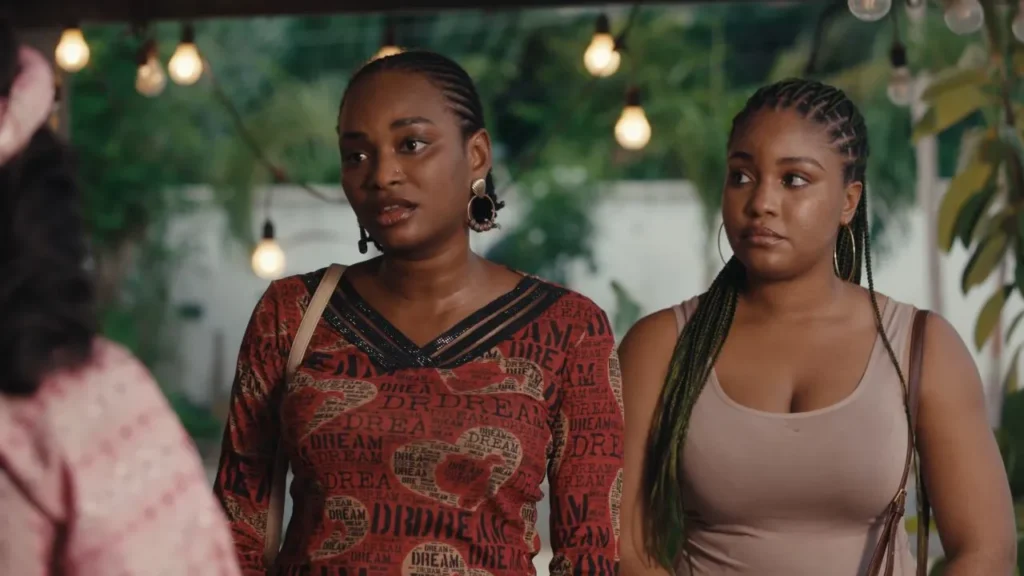
There is something particularly interesting about watching a story you know could have happened to somebody you know.
I recently watched the three latest short films released under the Zikoko Life Series. The strength of Zikoko's storytelling is its ability to take the seemingly ordinary experiences of Nigerians and turn them into stories worth talking about. It takes stories that could have existed as articles or personal accounts and gives them bodies, faces, voices, locations and conflicts.
The Power of a Story That Feels Like Somebody's Life: The Life Series is built around stories that have appeared across Zikoko's storytelling platforms, including Naira Life, Love Life and Sex Life. The idea is essentially to take these real-life-inspired experiences and reinterpret them through film.
When you watch either one you are not necessarily watching a film that feels like it was manufactured in a writers' room. You are watching something that feels like it began with a person somewhere saying, "This happened to me."
As a film critic, I always say that a short movie is either good or not good in its representation, the reason is a short film has very little time.
You cannot spend the first twenty minutes warming the audience up to the story. From the first scene, you have to make it count. You have limited time to establish character, conflict, context and resolution, and still leave the audience with something to think about.
Sirram: A Story That Could Become More: Of the three, Sirram was one I particularly enjoyed because of its authenticity and colour.
There is something about the story that feels lived-in. It has the kind of messiness that real relationships and real people possess. And perhaps because of that, I found myself wanting more from it. One of the people I discussed the films with, described her experience of watching Sirram as a constant re-evaluation of what she thought the story was about:
"Sirram that I thought was friends to lovers, then I thought it was sexual freedom, then I thought self-empowerment then I stopped thinking."
I actually like that observation because it speaks to one of the film's biggest strengths and, perhaps, one of its missed opportunities. There are several ideas sitting inside Sirram. Friendship. Romance. Sexual freedom. Self-empowerment. Family. Individual desire.
But perhaps the film could have benefited from choosing one of those ideas and allowing it to breathe. In fact, Sirram could make a very good series.
Before We Fall Asleep: When the Resolution Becomes the Problem: This was probably the weakest of the three for me. I found it a bit boring.
But interestingly, discussing it in a movie group made me see the film differently. Sometimes another person's interpretation does something your first viewing could not. The major issue I had with the film was its resolution.
The conflict itself felt inevitable. Following the story, you could see that the characters were heading towards that particular point. My question was not necessarily why did this happen?
It was: What led to the resolution?
How did these characters arrive at that place of understanding themselves and each other? That emotional bridge felt underdeveloped for me.
The same movie group discussion offered a much more layered interpretation of the film. It was noted that Zikoko's accompanying article made it understandable because it highlighted the couple's cohabitation. They could have chosen to go their separate ways, especially because they would not need to go through a divorce, but they remained together.
That observation changes the way you look at the story. Before Tobi's situation, they were a happy couple. And that is perhaps one of the most realistic things about the film: things can change very quickly.
I also pointed out that Tobi's patriarchal character does not simply disappear because he makes a different decision at the end. We can still see him wrestling with himself before arriving at that decision.
A Happy Ending: Sometimes Life Doesn't Need a Villain: This worked better for me. I liked it because it felt realistic, authentic and, in hindsight, even a little funny. There was something refreshing about the natural flow of the woman's choice. It did not necessarily have to be a "bad" decision.
That distinction was important.
We are so accustomed to films telling us what the correct decision is that sometimes a story becomes more interesting when a character simply makes a decision because it makes sense to them. Anyone who has gone through something similar and came out might find A Happy Ending a fun watch.
It is the kind of story that makes you look back at an experience that once felt serious and think, Ah. So, this was actually a whole thing.
Conversations About Women's Bodies: Looking at these films together, a larger conversation begins to emerge. Women's bodies. Sexual autonomy. Relationships. Choice. Patriarchy alongside the complicated ways Nigerian society understands all of these things. One film approaches the conversation with a certain avoidance. Another goes directly into it.
The Craft: Another person I discussed the films with, particularly loved Sirram and A Happy Ending for its sound, fluent Igbo, its homage to old Nollywood while remaining modern, and even its costumes.
The Danger of Forcing the Message: This was one criticism that cut across my discussions about the Life Series. Sometimes the films try too hard to make sure we understand the message.
A male friend made this point particularly strongly. His criticism was around the feeling that the story was forcing its message and, in doing so, trying too hard to make the male character an antagonist. There is a fine line between giving a story a clear position and telling the audience what conclusion they must reach.
Short Films May Be One of Nollywood's Most Underrated Tools: One thing I am discovering through watching short films is that short storytelling may be one of the most underutilized tools available to Nigerian filmmakers and writers.
It is a direct way of communicating an idea that does not necessarily need two hours. You need a strong premise, clear characters, a meaningful conflict and the discipline to know what the story does not need. And because the format is shorter, the audience is often willing to take a chance on it.
For funders looking for stories that can connect with audiences without requiring the scale of a feature film. Short films can be small in duration and still be large in meaning. Sometimes the biggest stories are not the longest ones.