Nigeria has no A-list actors.
Wait. Before you come for me, those are not my words.
That is the argument Dami Dawson made in his article published on It’s A Wrap, which has been generating serious heat since it dropped yesterday.
I have been in a film community group where the conversation has been going on since the article was shared, and the opinions are divided. Some people agree with him entirely. Many do not. So let me share where I stand.
Dami’s argument is based on the Ulmer Scale, a 100-point system built by entertainment journalist James Ulmer to measure a Hollywood star’s bankability. By that definition, an A-lister is someone whose name alone can unlock financing, distribution, and media attention. A bankable star, by the industry’s own words, is someone capable of guaranteeing box office success simply by being part of a movie.
That is a very specific and very narrow definition. And Dami is right that if you apply that Hollywood standard strictly to Nigeria. But here is my issue with the argument. Why is Hollywood the yardstick?

Hollywood is a specific industry with a specific financing model, a specific distribution infrastructure, and over a century of trade journalism, data collection, and institutional systems built around measuring star power. Nollywood does not have that same infrastructure. Applying Hollywood’s definition of A-list to a market that was built differently, funded differently, and operates differently is not a fair comparison.
My father once told me that a surgeon does not become less skilled because he was not trained at UNN. Okay you get me, my father never said so. I made that up.
Now, Dami does make one point that I fully agree with. Nollywood does not have verified, agreed upon data to settle this argument. That is a real problem. A UK distributor once asked a Nigerian director for a verified list of the industry’s best actors and came away with nothing, because no such list existed in any credible, tracked form. That is something the industry needs to fix urgently.
But the absence of data does not mean the talent is absent. Infact, Party Jollof Africa has started doing the work of tracking actor metrics, measuring which actors’ films have performed at the box office. That is the kind of system Nollywood needs more of, and it needs to be standardised.
The data problem, by the way, is not unique to Nollywood. Nigeria has NIN, BVN, TIN, and several other agencies collecting data from citizens, and we still struggle to put that data to meaningful use. This is a national problem.
For me, bankability is not universal. It is market specific.
Denzel Washington is one of the biggest names in Hollywood. Nobody is arguing that. But if Denzel Washington featured in a Nigerian cinema film tomorrow, I do not believe his name alone would move Nigerian cinema audiences the way it moves an American one. The Nigerian audience does not have the same emotional connection to him that they have to Genevieve Nnaji or Funke Akindele. His name does not carry the same weight here.
The same logic works in reverse. If Funke Akindele featured in a film targeting a mainstream American cinema audience, her name would not move those tickets the way it moves ours. That does not make her less of an A-lister. It simply means she is an A-lister in her market, which is the only market that should be used to measure her.
Dami mentioned Hollywood A-listers as the standard we should aspire to. But those same actors, if they ever featured in a Nigerian cinema production, would likely not perform the way he imagines they would here. Angelina Jolie’s name does not sell tickets in Surulere.
Bankability is about emotional proximity, cultural relevance, and market trust. Nollywood has actors who possess all 3 of those things within the Nigerian market. That is what A-list means here, and that is the definition we should use. Nollywood has A-listers.
Genevieve Nnaji directed and starred in Lionheart in 2018. Netflix acquired it, making it the first Netflix original film from Nigeria. It screened at the Toronto International Film Festival and the Marrakech International Film Festival. It was Nigeria’s first-ever submission to the Oscars. After that film, Genevieve signed with a Hollywood based talent agency. She also appeared in Farming, a British film directed by Adewale Akinnuoye-Agbaje, alongside Kate Beckinsale, Damson Idris, and Gugu Mbatha-Raw. If a name opening a Netflix deal globally and earning a Hollywood agency signing does not count as bankability, I want to understand what does.
Omotola Jalade Ekeinde starred in Ije in 2010, a film that toured US cinemas and won at the Las Vegas International Film Festival and the San Francisco Black Film Festival. With over 300 film credits and international recognition that stretches far beyond Nigeria, her name carries weight.
Sope Dirisu, who is of Nigerian heritage, starred in Gangs of London and is the lead in My Father’s Shadow, the Oscars Academy.
Chiwetel Ejiofor, born to Nigerian parents, was nominated for an Academy Award for Best Actor for 12 Years a Slave, one of the most celebrated films of the last two decades. He has worked consistently at the highest level of global cinema.
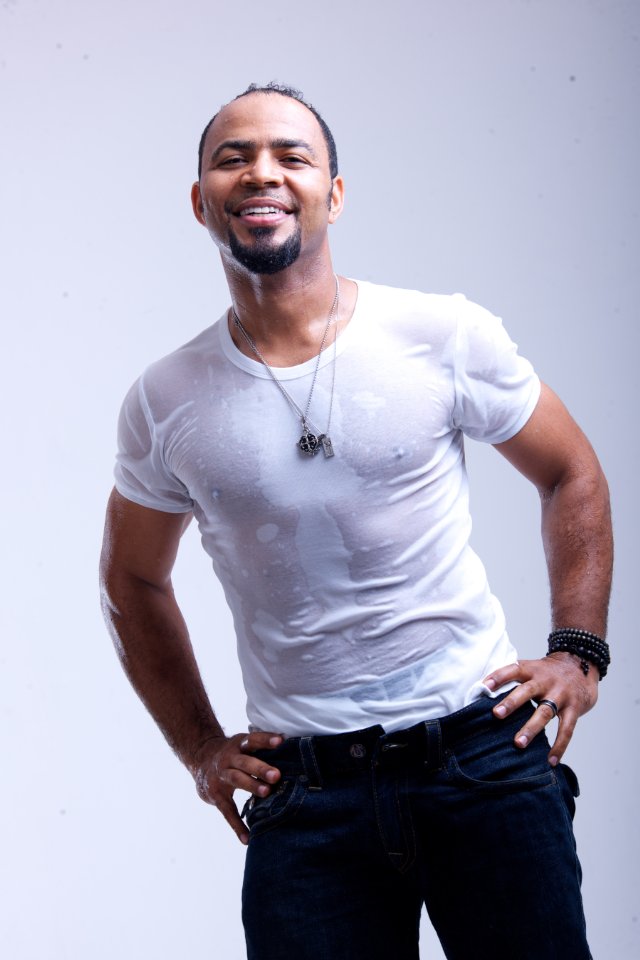
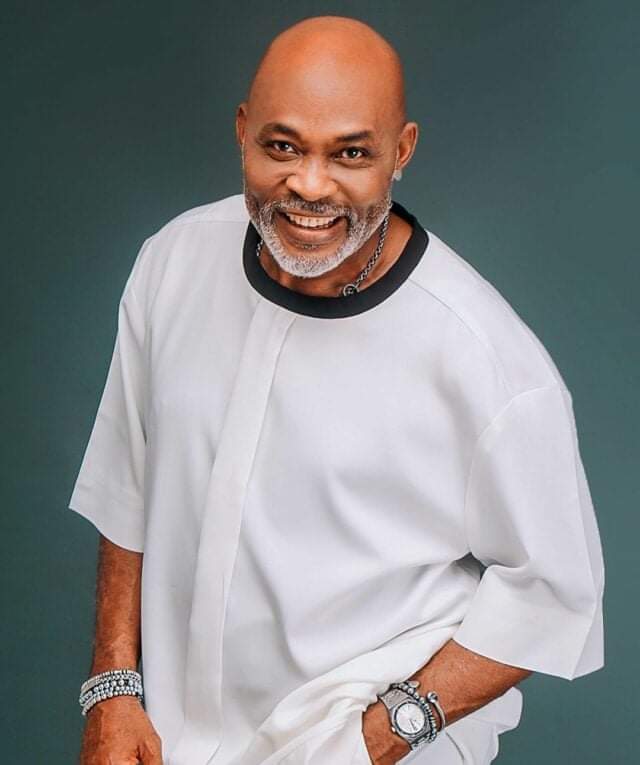
Richard Mofe-Damijo, Ramsey Nouah, Scarlet Gomez, Odunlade Adekola, Iyabo Ojo, Ibrahim Chatta, and Toyin Abraham are names whose attachment to a film moves tickets in Nigeria.
Funke Akindele is the only filmmaker in Nollywood history to cross ₦1 billion at the box office 3 separate times, crossing ₦2 billion with Behind the Scenes as writer, director, producer, and lead all at once. If that is not bankability, I do not know what word to use.
Am I saying Nigeria has A-listers by Hollywood’s exact definition? Not necessarily. What I am saying is that Hollywood should not be the definition we use.
Every market has its own structure. Saying Nigeria has no A-list actors is simply not accurate, no matter which definition you choose to apply.