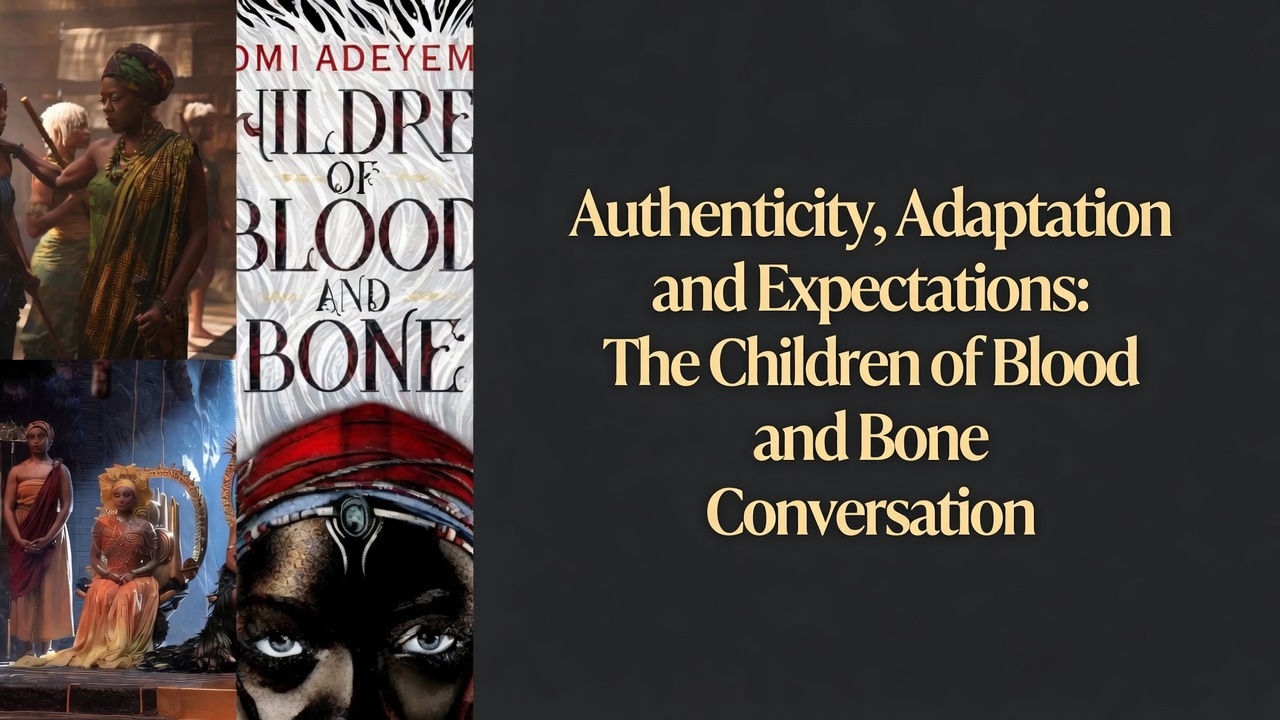
I have read Children of Blood and Bone. The complete trilogy, actually. So, when I heard a movie was being made from one of the books, I just knew it wouldn’t do it justice.
I have always stood by the belief that a movie adaptation of a book never does it justice. The moment a story leaves the pages of a book and enters the hands of a studio, it becomes something else. The author should have known this somewhere before, or at least when, the deal was discussed and signed.
Now, with all the conversations surrounding the adaptation, I think it is important to separate what are genuine criticisms from what are simply the realities of filmmaking.
Let’s start with authenticity. Can authenticity really be discussed when the book itself is fiction and fantasy? Yes, because while the magic may be fictional, the cultural inspiration is undeniably Yoruba. That is why many people expected the film to reflect that more deeply. Their concerns are valid.
Then there is the issue of the cast. It is sad that we didn’t have actual Nigerian native Yoruba actors leading this story. Though I think that is the prerogative of the director and the studio. They bought the rights first. Once you sell your work to a major Hollywood studio, the creation of the film is no longer entirely yours. The director can direct and create as they see fit.
What did the author think would happen when the deal was signed? This always happens with book adaptations. When you sell, it’s not your own anymore, especially if you’re not the one directing it.
If accurate cultural storytelling was the priority, maybe another route could have been explored. Maybe sell to FilmOne or Nile Entertainment, partner with EbonyLife, Anthill or Inkblot, and perhaps even directed with a Nigerian director alongside an international production partner.
Would it have been smaller? Probably. Would it have felt more culturally authentic? Quite possibly.
Then comes the question of location. People have asked why the film wasn’t shot in Nigeria. Honestly, I think we can blame our economic realities, security concerns and infrastructural limitations as much as we blame the production. We can talk about authenticity all day, but productions of this scale require infrastructure, logistics and security. Until we consistently provide those, major international productions will continue looking elsewhere.
And then there is the uncomfortable truth. Nollywood, as an industry, does not yet have the capacity to produce a fantasy epic on this scale. Not because we lack talent, but because we lack the financial muscle, technical infrastructure and long-term investment. Can our people do this and do it better? Absolutely. The question is, why didn’t we?
So, is this adaptation a win? It is, and it isn’t.
It is a win because Hollywood is taking a chance and spending millions adapting an African story rooted in our heritage for a global audience.
It isn’t because many of the cultural details people hoped to see inevitably got filtered through a Hollywood system that doesn’t necessarily care about the culture the way Nigerians do.
Could the author have negotiated better terms? Yes. Could the production company and director have done better? Maybe. But they also have a proven formula that has worked for them, and because they are financing the project, they have the final say. At the end of the day, we just have to pick what works and leave that which doesn’t.
My advice is simple. If you have read the book, forget whatever you read before watching. If you have not, watch the movie for what it is: a work of fiction and fantasy.
Sometimes that is the only way to appreciate both versions without asking one to become the other.