There is something strange about the way we premiere films in Nigeria. We spend enormous energy creating an evening that looks like an event, but far less energy asking whether the film itself is an event worth talking about.
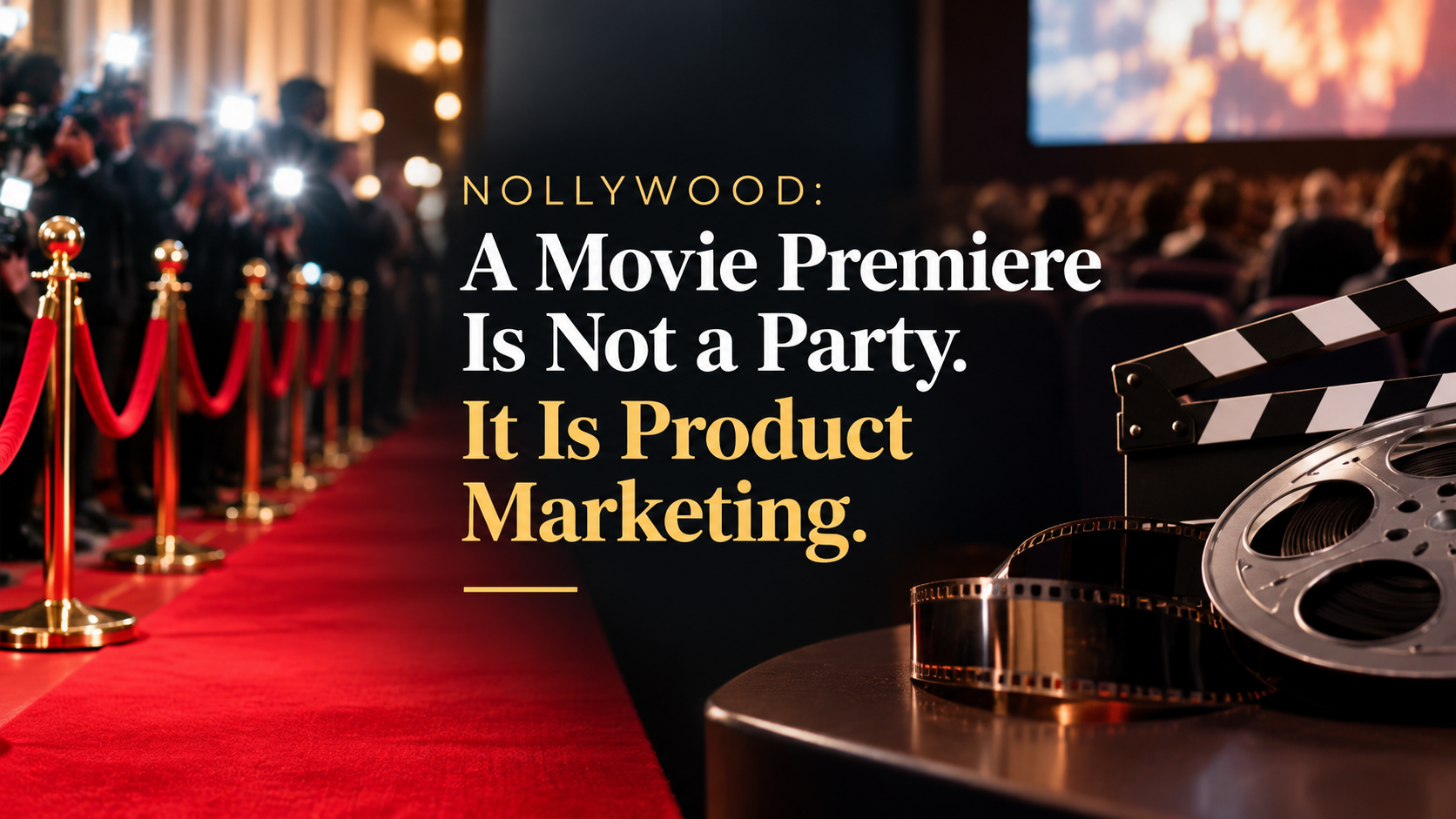
The red carpet is immaculate. The guests arrive. The cameras flash. The outfits are photographed. The champagne flows. Social media is flooded with images, then somewhere between the last photograph and the next trending topic, the movie disappears.
A movie premiere, private screening or first look is not the destination. It is a marketing tool. If we are going to spend money organizing one, we should be asking a much more important question than “How glamorous did it look?”
We should be asking: “What did this event do for the film?” Are they talking about the story? The performances? The cinematography? The writing? The directing? A particular scene that stayed with them? Are they recommending the movie to someone else? Or are they simply posting photographs from the red carpet and moving on to the next event?
We need to rethink the guest list: One of the biggest problems with the way some Nigerian premieres are organized is that they become gatherings of family, friends, colleagues and celebrities, and there is nothing wrong with this.
But a premiere cannot exist primarily for the comfort of the people who made the movie. Your audience should be represented in that room.
Bring filmmakers. Bring critics. Bring journalists. Bring film students. Bring people who actually buy cinema tickets. Bring people who understand the genre. Bring people who don't necessarily know the cast personally. Bring people who will challenge the film.
Bring people who can genuinely tell someone else, “You should see this.” Because that is where the real marketing begins.
A good premiere should create conversation before the event, during the event and, most importantly, after the event.
You want people leaving the cinema excited enough to talk about the film. You want their enthusiasm to make somebody who wasn't there curious. You want the person who sees their post three days later to think, Wait, what movie is this? I should watch it.
That is word-of-mouth marketing. And it is considerably more valuable than having 200 people post pictures from the same red carpet.
An Uncomfortable Truth: You cannot market your way out of a bad movie. No premiere, no influencer campaign, no celebrity attendance, no beautifully designed invitation, no expensive venue and no amount of social media noise can permanently rescue a film that does not respect its audience.
This is where the conversation moves beyond premieres to making better films. Producers, filmmakers, production companies and financiers have to take greater responsibility for what they put their money behind.
Study the craft. Understand storytelling. Develop the screenplay. Cast the right actors. Hire people who understand what they are doing. Invest in the technical departments that actually matter. Give the director the right support. And, above all, remember the person sitting in the cinema or their homes who has paid with their hard-earned money to watch your film.
That person has given you something valuable: their time and their money. Do not take either for granted.
Audiences are not asking for every film to be a masterpiece. They understand that filmmaking is difficult. They understand limitations. They understand that not every production has the budget of a major studio. But there is a difference between a film that has limitations and a film that feels like nobody cared enough to get the important things right.
Even when everything doesn't work, audiences should still be able to see the effort. They should be able to say, It wasn't perfect, but they tried. What we cannot keep doing is asking viewers to spend money on films that leave them feeling that their intelligence has been insulted and their time has been wasted.
We need to stop seeing a premiere as the grand finale of filmmaking. It should be the beginning of the audience conversation. The film is finally in front of people who can influence whether other people watch it.
Create experiences around the story. Give people something to remember. Invite people who matter to the film's commercial and cultural life. Make journalists want to write about it. Make critics want to discuss it. Make audiences want to recommend it, ultimately, the best marketing strategy for a movie is still a good movie. Everything else should amplify that.
The Nigerian film industry is growing. Our audiences are becoming more discerning. They have more choices than ever before, and they are increasingly willing to tell other people when a film is worth their money and when it isn't.
So perhaps it is time we rethink the premiere. Less emphasis on who looked good on the red carpet. More emphasis on who actually watched the film.
A premiere is not a party. It is your first major opportunity to convince an audience that your film is worth their time. Make it count.