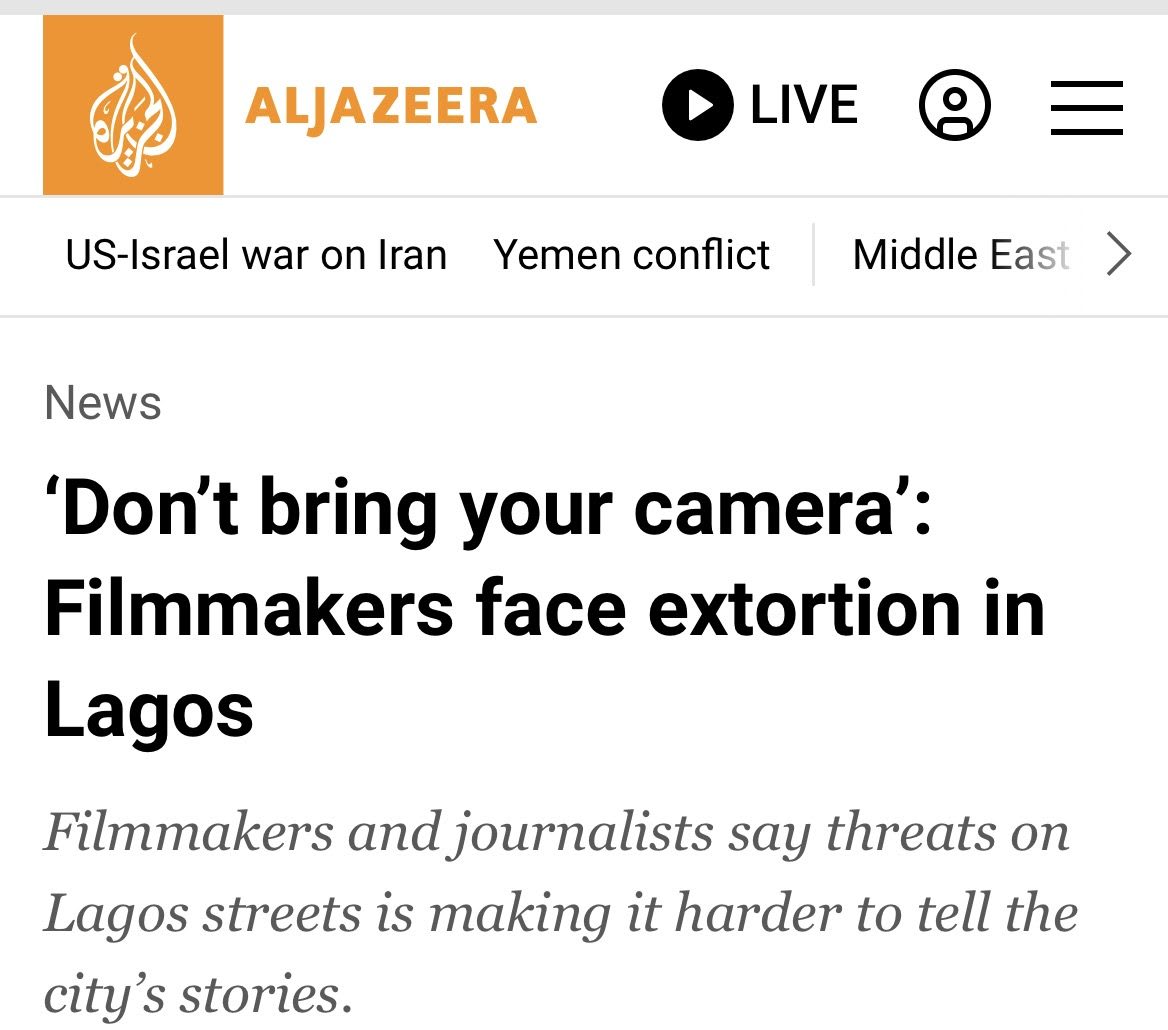
An investigative report by international news network Al Jazeera has examined how street extortion and harassment in Lagos are making it increasingly difficult for filmmakers, photojournalists and other content creators to work in public spaces.
Titled ‘Don’t Bring Your Camera’: Filmmakers Face Extortion in Lagos, the report documents how informal groups, touts and area boys demand payments from media crews before allowing them to film or photograph in certain locations. These demands, which are not backed by any legal authority, can turn ordinary production activities into costly and sometimes intimidating encounters.
For filmmakers working with limited budgets, the additional payments create another expense in an industry already burdened by equipment rentals, location fees, crew wages, transportation and security costs. Crews can also find themselves under pressure to pay because abandoning a location after investing time and money in a shoot may result in even greater losses.
The report also examines how the threat of harassment affects the kind of stories filmmakers can tell. Capturing everyday life in Lagos often requires crews to work on streets, markets and other public spaces. But when filming comes with the possibility of intimidation, demands for money or equipment damage, spontaneous documentation becomes difficult.
The consequences extend beyond the film industry. Journalists and camera operators covering public incidents, including demolitions, fires, floods and protests, can also face demands for payment or attempts to stop them from recording. When reporters are prevented from documenting such events, the public loses access to information about developments in their communities.
Independent photojournalist Jean-Fidele E Ananou told Al Jazeera that the situation had forced him to stop his regular street documentation of Lagos. He described the experience as a major obstacle to his work and a problem that distinguishes the city from other global creative centres.
Camera operator Karina Adobaba-Harry also recounted experiences in which production crews had to respond assertively or pay money from their own pockets to prevent their equipment from being damaged.
Responding to the concerns, Lagos State Commissioner for Information and Strategy Gbenga Omotosho said no individual or group has the legal authority to demand money from people taking photographs or filming in public spaces. He added that the state government would not tolerate such conduct and that the matter falls within the jurisdiction of the police.
However, the experiences documented in the report raise questions about how effectively existing laws are enforced on the streets. Industry stakeholders argue that public statements condemning extortion must be matched by practical measures that protect people working with cameras in public spaces.
Filmmaker Ikechukwu also expressed concern about the effect of these incidents on Nigeria’s image, particularly when videos of tourists and creative professionals being harassed circulate online. Such encounters, he argued, undermine efforts to present Lagos and Nigeria as welcoming destinations for international productions and visitors.