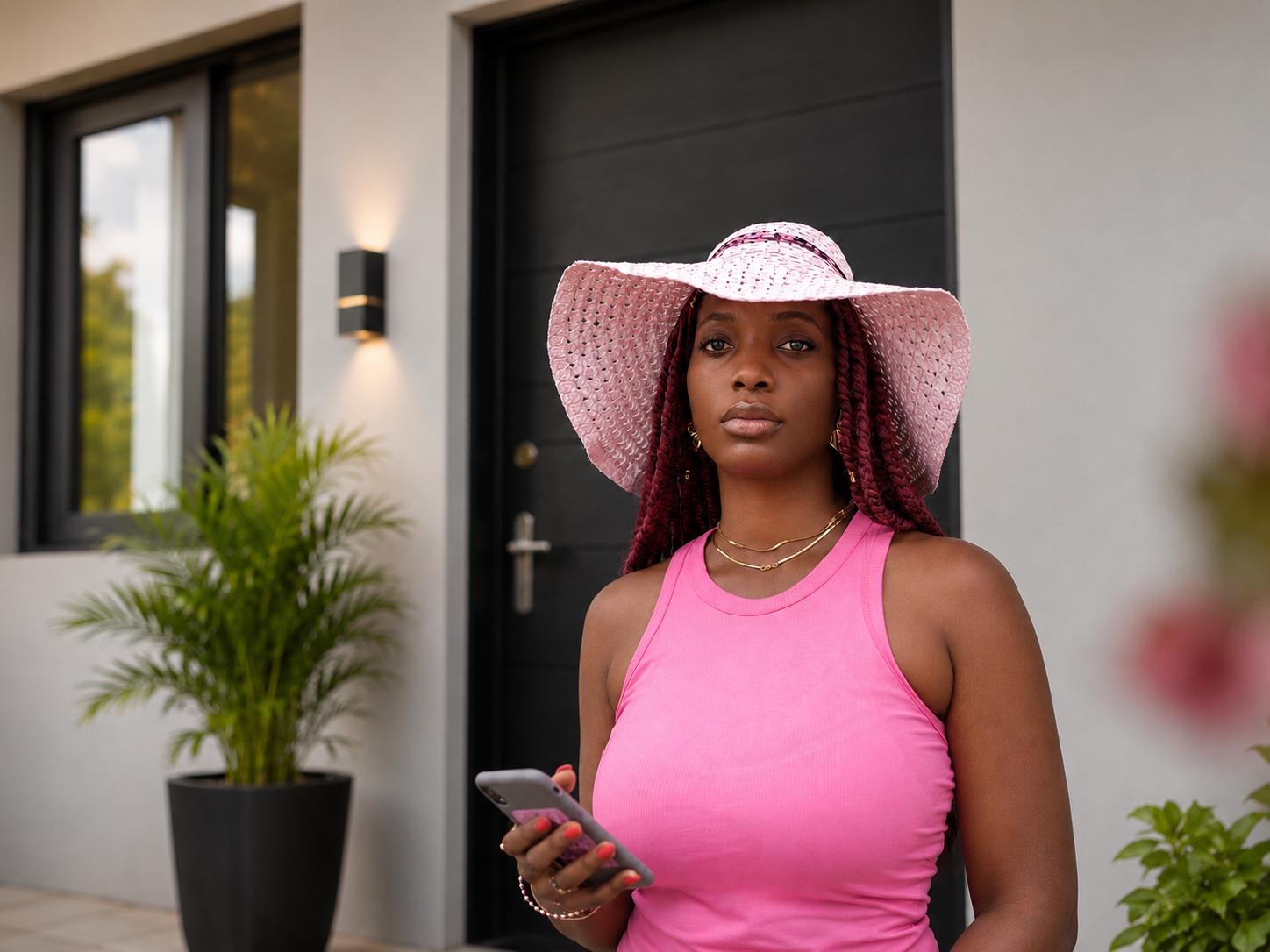
Cynthia “Esoanwan” Offia did not set out to master every corner of production. She set out to protect stories, and along the way she became the person who could hold together a film set, a stage production, and a full scale creators’ retreat, sometimes within the same season.
An EbonyLife Creative Academy trained producer, Offia has worked as a Production Manager, an Associate Producer with Imoh Umoren, a Line Producer with Akay Mason, and Stage Manager for The Offer at Terra Kulture with BAP Productions. She currently serves as Programme and Event Coordinator for the Indie Vibe At Home Together Creators’ Retreat, and she is the founder of Black Unicorn Studios, where she is developing psychological thrillers and horror rooted in African storytelling.
Sitting down to talk about her career, Offia is candid and unhurried, the kind of person who has clearly thought hard about what her work actually demands of her.
Ask her what the Academy gave her that no set ever could, and she answers without hesitation. “The single biggest thing EbonyLife and production taught me, that you can’t quite learn on a set alone, is how to fiercely trust your professional instincts when it comes to people,” she says. In her world, this instinct is not a soft skill. It dictates how she reads a room, how she anticipates friction long before it surfaces, and how she protects a project before small cracks become structural failures.
Across her many roles, one pulls at her physically and another pulls at her creatively, and she is honest about the difference. “Stage management feels deeply aligned with my natural instincts when it comes to the physical, boots on the ground energy of being on set, navigating spaces, timing, and immediate execution,” she says. But her real anchor sits elsewhere. “Creatively, my core anchor is as a creative producer and development manager. I love shaping the seed of a concept, nurturing the story from its earliest treatments, and watching it build into a tangible, breathing reality.”
That instinct to protect a story was shaped early, working under Imoh Umoren. The lesson has remained with her since. “Stay calm, don’t panic, stick to the story’s original vision and integrity,” she says, describing the approach Umoren instilled in her. Logistical problems are inevitable, she has learnt, and the discipline lies in knowing which pivots are worth making. “As long as a pivot doesn’t compromise our time, our budget, or the soul of the story, you stick to the creative north star. If you sacrifice the story because of panicked logistics, you’ve lost the entire point of making the film.”
Nowhere was that philosophy tested harder than during her time line producing with Akay Mason. Only two days into one production, she discovered a focus puller had shown up under the influence of hard drugs. Her response was immediate. She fired him on the spot, ensured he refunded the advance he had already collected, and handled the entire matter in front of the crew so there was no ambiguity about the standard she expected. A replacement joined the production that same day, and the shoot ran on a zero tolerance policy from that point forward.
Then came a quieter crisis, the kind that creeps up slowly. Midway through another project, she noticed the quality of the crew’s meals had dropped noticeably. Digging into it, she discovered an Executive Producer had slashed the food budget without informing her. The frustration from that moment has not fully faded. She called the Executive Producer directly and told him plainly that the quality of a film depends on how well you take care of the people working day and night to make it. The funds were restored, and the crew was fed properly again.
Few producers move as fluidly between theatre and screen as Offia does, and she refuses to rank one above the other. Stage managing The Offer at Terra Kulture with BAP Productions put her inside the full physical intensity of live theatre. “You are wearing every hat imaginable, handling call times, running lines with actors, coordinating logistics, managing props, overseeing welfare, and handling rapid costume changes for four actors, including one juggling six different characters, while making sure laundry gets done,” she says. Screen production, by contrast, hands her dedicated departments and shifts her focus toward supervision, though multi location shoots bring their own operational weight.
The real difference, she says, comes down to the margin for error. “In film, you have the safety net of post production, multiple takes, and different camera angles to fix or elevate a moment. In live theatre, there is no cut, no second take, and no post production rescue.” Weeks of rehearsal exist for exactly that reason. When the curtain rises, everything has to land in real time.
That same appetite for a challenge follows her into her latest role as Programme and Event Coordinator for the Indie Vibe At Home Together Creators’ Retreat. Long known primarily for its music, the retreat is expanding under her guidance this year, with curated film screenings through Frames and Frequencies, alongside karaoke and a paint night called Brushes and Ballads. Producing an event at this scale for the first time comes with its share of nerves, she admits, but her belief in the work carries her forward. “I know the films we’re showing carry deeply compelling stories, and I have complete faith that they are going to find their true audience,” she says.

That same conviction drives Black Unicorn Studios, the company she founded to explore territory Nollywood rarely touches, psychological thrillers and horror. For Offia, the genre was never about the scares. “There is something profoundly moving about exploring the darker, heavier emotions people experience, and watching how they navigate and process them. Honestly, it feels like a form of therapy,” she says. Beneath the surface, she believes, these stories are an exploration of the human psyche under pressure.
Her vision for bold, original African storytelling reaches further still. She wants filmmakers across the continent to step outside a single cultural template and consider stories that merge different West African traditions in the same frame. “Movies aren’t meant to be literal reality, they are meant to tell stories anchored in human truth. We have a goldmine of diverse cultures and untold narratives across the continent,” she says. Royal dramas and epic narratives remain valuable, she notes, but the continent has the material to do far more than repeat them.