
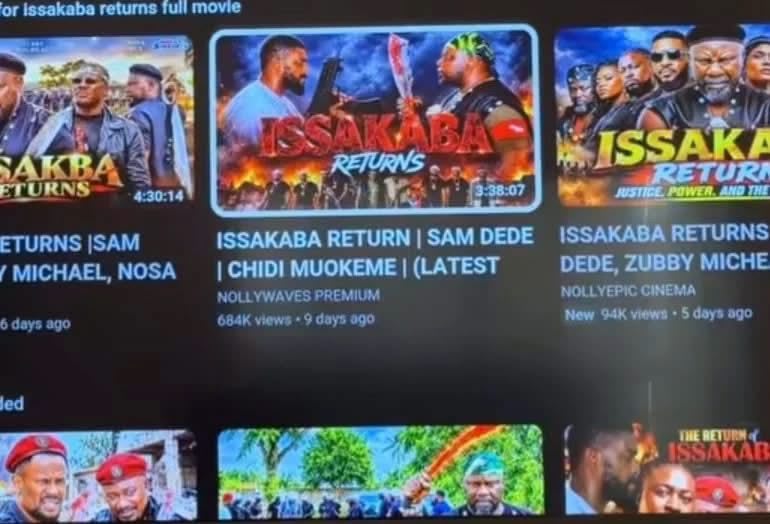
Lancelot Oduwa Imasuen, director of Issakaba Returns, has petitioned the Inspector General of Police over the online theft of the film, which opened in Nigerian cinemas on 13 November 2026.
The petition follows a wave of unauthorised uploads on YouTube. On Monday, 23 November, Chidi Mokeme, who stars in the film, posted a recording on Instagram showing several channels using the title as bait. Some of them attach it to unrelated films, and others upload illegal copies of the original Issakaba of 2001. Mokeme also said some uploaders record the new film from cinema screens and post it online while it is still in theatres.
Mokeme called piracy "a killer" and said intellectual property theft of any kind is a crime. He said some Nigerians "really have no joy" and that the country has "totally lost our value system". According to him, the channels profit from other people's work by tricking viewers into clicking, which inflates their views and engagement.
Imasuen calls piracy "our tragedy" and says YouTube channels and social media platforms are "killing us". He expects arrests to begin on Wednesday, 25 November.
His petition asks for more than the arrest of uploaders. He wants cinemas to put measures in place against recording during screenings, including detection systems, and he wants government agencies that protect intellectual property to act against the channels and platforms carrying pirated copies. The complaint rests on the Copyright Act 2022, which covers unauthorised online distribution of protected works. The Nigerian Copyright Commission enforces the Act.
The film is still earning in cinemas. Issakaba Returns took ₦44 million in its first weekend on the box office tracker, while the production team puts the figure at ₦47.8 million. It stars Sam Dede, Chiwetalu Agu, Iyabo Ojo, Regina Daniels, Nosa Rex and Mokeme, and it arrived 25 years after the original. Blue Pictures distributes it.
A pirated copy on YouTube is costly for a film at this stage. Every viewer who watches a recording from home instead of buying a cinema ticket reduces the weekend takings that exhibitors, distributors and producers share, and the film still has weeks of its run left. The upload also earns advertising revenue for the channel owner, which means the person who copied the film is paid for it.
The police, the Nigerian Copyright Commission and YouTube have made no public statement on the petition.
Nigerian producers have used the police route before. In January 2024, Lagos police arrested suspects accused of copying and streaming Toyin Abraham's Malaika, after she and her co-producer filed a complaint. That case involved a website and a streaming link. The Issakaba petition goes further, because it names YouTube channels and the platforms that host them.


