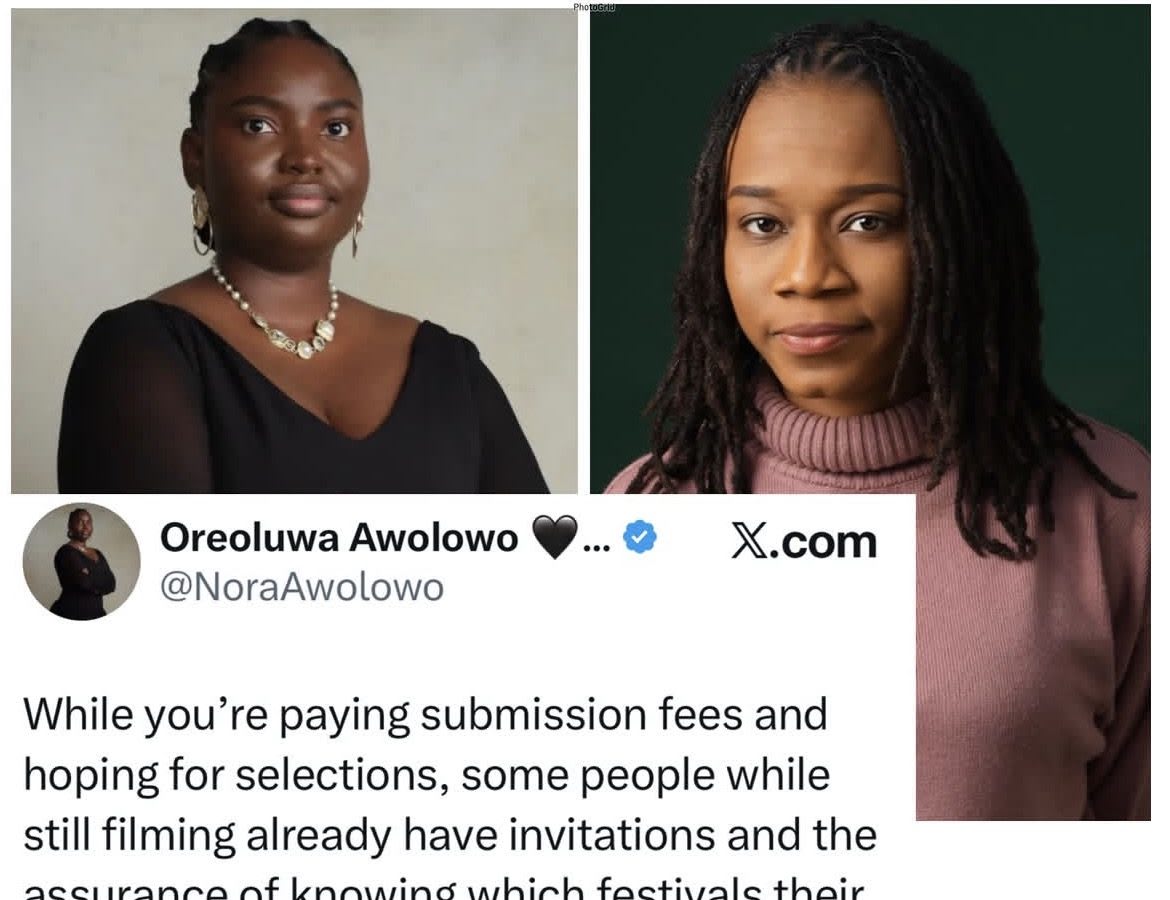
A disagreement between Nigerian filmmakers Blessing Uzzi and Nora Awolowo has opened a debate about access to international film festivals, the cost of submitting films and the influence of professional relationships on opportunities within the global film industry.
The exchange unfolded on X on Friday, November 20, 2026, after Nora Awolowo questioned the disparity between independent filmmakers who spend money submitting their films to festivals without any guarantee of selection and others who appear to have secured invitations even before completing their productions.
Posting through her account, @NoraAwolowo, Nora Awolowo wrote: “While you’re paying submission fees and hoping for selections, some people while still filming already have invitations and the assurance of knowing which festivals their films will screen at.”
She ended the post with the Yoruba expression, “Ma pa ara e”, expressing frustration with what she perceived as an uneven system in which access to festival opportunities is not necessarily the same for everyone.
Blessing Uzzi disagreed with the framing of the issue. Responding hours later, the filmmaker argued that submitting films to festivals should be treated as a deliberate investment and included in the financial planning of a production.
“If you made a film hoping to take it to festivals, submit it! Pay the submission fees,” Blessing Uzzi wrote.
She suggested that filmmakers who cannot afford the fees could seek assistance from friends and colleagues rather than abandon the submission process. She also argued that festival expenses should be considered alongside other promotional and marketing costs when budgeting for a film.
According to Blessing Uzzi, securing a selection can provide more than an opportunity to screen a film. It can also introduce filmmakers to festival programmers and other industry professionals, creating relationships that may make subsequent submissions easier.
“Hopefully, one festival selects your film, and that becomes an opportunity to build relationships with programmers. You might even get waiver codes for future submissions. Everything requires investment, and festivals are no exception,” she added.
The disagreement is particularly interesting given Blessing Uzzi’s own experience navigating international film festivals. Her production Freedom Way, directed by Afolabi Olalekan, premiered at the Toronto International Film Festival in 2024 before going on to receive recognition at other festivals. In 2025, Blessing Uzzi also participated in the Locarno Film Festival’s Open Doors programme in Switzerland as a selected African producer, working alongside filmmaker Dika Ofoma on the project Kachifo.
Her experience demonstrates how festival participation can lead to further professional opportunities, although it does not necessarily resolve the concerns raised by Nora Awolowo about how filmmakers gain access to those opportunities in the first place.
Nora Awolowo, meanwhile, has built an international profile through her filmmaking and production work. She is associated with Rixel Studios and has worked on projects including Black Market, which drew international attention following its record-setting screening event in Lagos in September 2026. Her criticism appears directed at the difference between filmmakers who must navigate open submission processes and those who have access to festival organisers and programmers through existing industry connections.
At the centre of the disagreement are two different experiences of the festival system. For Blessing Uzzi, submission fees are part of the cost of pursuing international exposure, and filmmakers should budget for them in the same way they budget for publicity, distribution and other aspects of a film’s release.
For Nora Awolowo, however, the issue is not simply whether filmmakers should be willing to spend money. It is whether the system offers equal opportunities to those who do not already have access to influential industry networks.
There is also an important distinction between submitting a completed film through a festival’s public submission portal and receiving a direct invitation to screen or participate in a programme. Festivals operate through different selection routes, including open submissions, curated programmes, industry invitations and project-development initiatives. These routes do not always offer filmmakers the same experience.
Paying a submission fee does not guarantee selection, just as receiving an invitation does not necessarily mean a filmmaker has bypassed every stage of evaluation. However, access to programmers, curators and established industry networks can influence how easily filmmakers discover opportunities, secure introductions and position their projects.
The cost of submissions is another concern, particularly for filmmakers working with limited resources. A film intended for an international festival run may require multiple submissions across different festivals, with each application adding to the project’s expenses. Even when a filmmaker receives a selection, there may be additional costs associated with travel, accommodation, accreditation and promotional materials.
The exchange between Blessing Uzzi and Nora Awolowo therefore touches on a question that goes beyond the price of submitting a film: how accessible is the international festival circuit to filmmakers without established connections or substantial financial backing?
While Blessing Uzzi advocates planning and persistence, Nora Awolowo’s remarks call attention to the advantages that existing relationships and early access can provide. Their disagreement has brought that tension into public view, particularly for Nigerian filmmakers seeking opportunities beyond the local industry.